Post
Why did we stop going to the Moon more than 50 years ago, and why have we decided to return now?
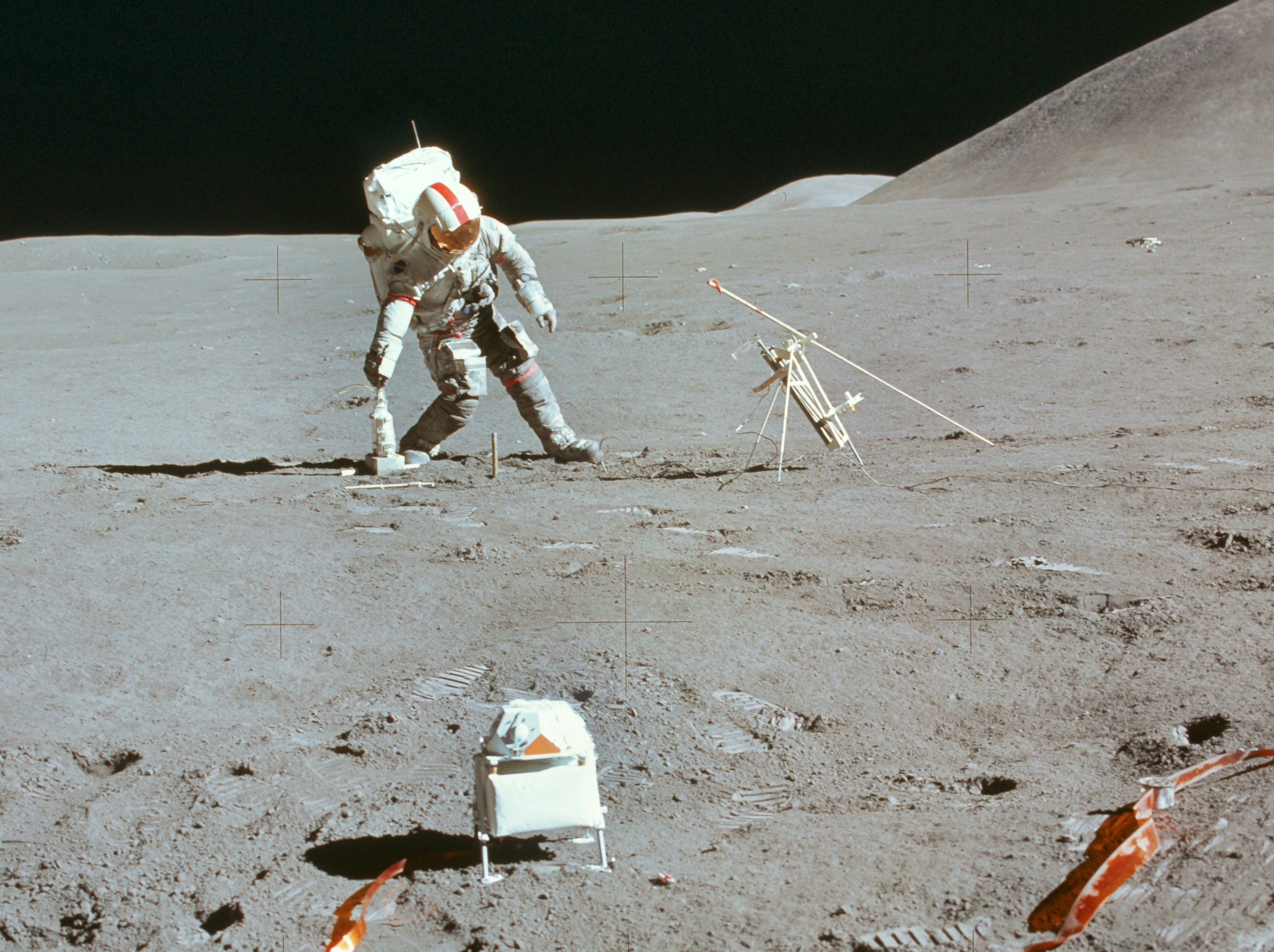
The short answer: we stopped going because a marketing campaign ended. We're returning now because the business opportunity is huge. But let's deep dive into the long answer, because it's full of fascinating nuances about the political context of both eras.
Both NASA's Apollo missions and the Soviet lunar program were, in essence, geopolitical marketing campaigns. During the Cold War, the United States and the Soviet Union were fighting for the top spot on the global technological and political scoreboard. Being the first to set foot on the Moon was the ultimate "slam dunk" in that struggle. The Moon was the greatest propaganda stage in history.
While the Space Race brought significant scientific breakthroughs, neither power expected them to have a positive short-term ROI for their economies. Both the U.S. and the USSR invested massive percentages of their GDP into their lunar programs. It was, without a doubt, the most expensive marketing campaign in history.
The Space Race was full of milestones, and the Soviets started by sweeping the board. They were the first to launch a satellite (Sputnik), the first to put a living being in orbit (Laika), the first to put a human in space (Gagarin), the first to put a woman in space (Tereshkova), and the first to perform a spacewalk (Leonov).
But everyone knew the only milestone that really mattered was setting foot on the Moon. The Americans stepped on the gas and didn't look back. On July 20, 1969, Neil Armstrong and Buzz Aldrin planted the Stars and Stripes on the lunar surface. The Space Race was over. The Americans had won.
The Soviets dismantled their lunar program; they had been defeated, and it made no sense to continue burning through cash. The Americans continued for a few more years out of inertia, but not for long. In just three years, public interest vanished. While 94% of American households with a TV watched the Apollo 11 landing, the ratings for successive missions plummeted.
For Apollo 13, the major networks broadcast the launch but then switched back to sitcoms and game shows. The public only tuned in again when the explosion occurred on the spacecraft and the mission became a rescue operation (which was a success).
Apollo 11 was the most epic feat in human history. The subsequent missions were just middle-aged men picking up rocks in slow motion. Without public interest, budgets were slashed until the Apollo program was finally canceled. The last mission was Apollo 17 in 1972. The Vietnam War was costing more than expected, and outside of NASA, few were sure why we were still sending people to the Moon.
There is an alternative timeline in which humanity reaches Mars before the year 2000. It was the dream of Wernher von Braun, the creator of the Saturn V rocket. The Apple TV+ series For All Mankind perfectly recreates that timeline.
In total, twelve humans walked on the Moon between 1969 and 1972. We haven't been back since. Of those twelve, only four are still with us, all in their nineties. If the roadmap for the Artemis missions holds, one of them might actually get to pass the torch in person.
Conspiracy theorists often argue that the proof we never went to the Moon is that we haven't been back in 50 years. In reality, it's simpler: it's a matter of incentives. During the Cold War, we had an incentive to go. Then, it disappeared. Now, it's back.
Why are we going back now? Because now, there's a business case. Artemis is the first step toward an interplanetary economy. Unlike the Apollo program, Artemis is built for permanence and resource exploitation. It's no longer about leaving a footprint; it's about establishing an outpost.
The 20th century was defined by the space race and the nuclear race. In the 21st century, the board is much more crowded: AI, biotech, quantum computing, semiconductors, energy, and space. China and the United States are going "all-in" on every front. There is a lot at stake.
This is a scenario that looks more like the Age of Discovery than the 1960s. Some call what we are experiencing today the "Tordesillas Moment" of space, referring to the 1494 treaty where Spain and Portugal divided the "New World" between them.
The new space economy will have many drivers: telecommunications, data storage, orbital manufacturing, mining, and space tourism. Private companies know the market is huge, and they're going all out. During Apollo, NASA was the only player. In the Artemis program, companies like Elon Musk's SpaceX or Jeff Bezos's Blue Origin are key partners.
And this time, everyone has learned their lesson. You have to build a narrative to keep the public engaged. Private companies know that risky bets are easier to fund when people are paying attention. That's why Elon Musk does things like launching a Tesla Roadster into space with a mannequin and a camera.
What's next? All these new industries need a foundation: infrastructure. The U.S. roadmap is clear. Step one: build Gateway, a station in lunar orbit. Step two: build a permanent base on the lunar surface.
In summary: We aren't going back to the Moon just to say we did it. We are going back to stay. We're going back because the numbers finally pencil out. In a few days, the crew of the Artemis II mission will fly over the Moon. If all goes well, in 2028, the crew of Artemis IV will set foot on the surface once again. We are living through the start of the second great chapter of the space age. If things move fast enough, you and I might just make it to lunar orbit in our lifetime.